

HON'BLE GOVERNOR HP

HON'BLE CHIEF MINISTER HP

HON'BLE VICE CHANCELLOR
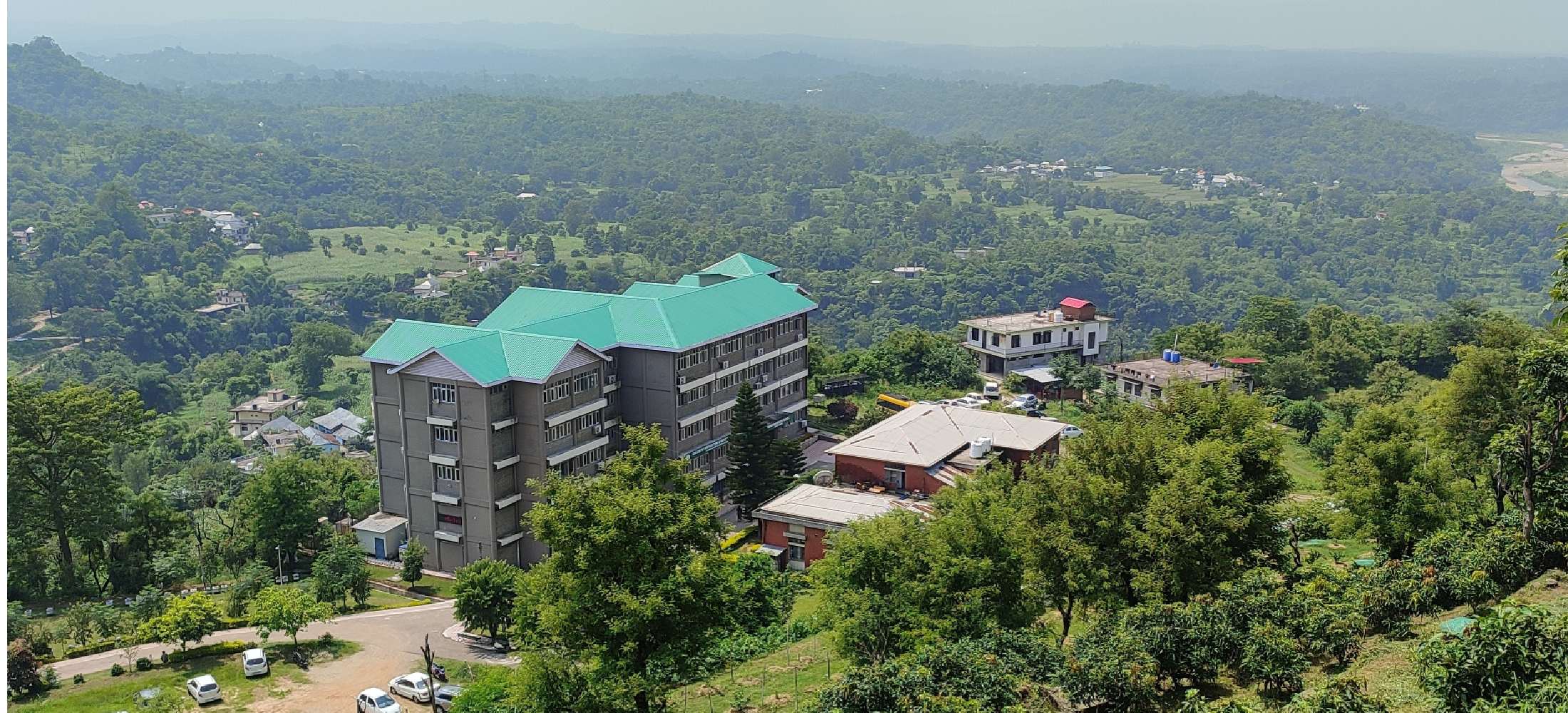
The College of Horticulture and Forestry was established as the third constituent college of Dr Yashwant Singh Parmar University of Horticulture and Forestry at Neri, Hamirpur, Himachal Pradesh. The college has its roots in the Regional Horticultural and Forestry Research Station, Bhota, which was established on 29th October, 1999. The research station was upgraded to the Institute of Biotechnology and Environmental Science, Neri, on 19th April, 2011, with a mandate to provide undergraduate teaching in horticulture and biotechnology, leading to B.Sc. (Hons) Horticulture and B.Sc. (Hons) Biotechnology degrees. On 28th August, 2014, this institute was upgraded to the College of Horticulture and Forestry, Neri, with the addition of an undergraduate programme in B.Sc. (Hons.) Forestry. From the 2017-18 academic session, postgraduate programmes in nine disciplines were introduced to strengthen research and development activities at this college. The B. Tech. (Food Technology) programme was introduced from the academic session 2023-24. The college has been extending services in Horticulture and Forestry, including the introduction of new crops and varieties, crop improvement and development, technology transfer, entrepreneurship development, and capacity building in horticulture, forestry and biotechnology for the Shiwalik Hills of the Himalayas. The college campus at Neri is situated at 31º41’47.6” N & 72º28’06.3” E, at an elevation of about 620 m above mean sea level, with hilly and mountainous topography and a subtropical climate.
The college caters to the needs of the Shiwalik Hills, comprising the Subtropical low hills zone (Zone-I) and the Mid hills Sub-humid zone (Zone-II) in Himachal Pradesh, including Hamirpur, Bilaspur, Una, and parts of Chamba, Kangra, Mandi, Solan, Shimla, Kullu, and Sirmour districts. Out of the total geographical area of 55,673 km2, these zones occupy about 20,964 km2, with a population of 48.95 lakhs, accounting for about 70% of the state's total population of 68.64 lakhs, and an average population density of 233 persons per km2, as against 123 persons per km2 in the state. Around 71% of the population in these zones live on only 37% of the total area, while the remaining 29% of the population resides in areas covering 63% of the land. Consequently, providing higher education in Horticulture, Forestry and related fields near these zones becomes increasingly essential.
Since the inception of the College, 639 students of B.Sc. (Hons) Horticulture, 364 students of B.Sc. (Hons) Forestry, 276 students of B.Sc. (Hons) Biotechnology, 347 students of Master's and 02 students of Ph. D. programmes have completed their degrees from this college. The students achievements are a proud reflection of the College’s academic excellence. Many students have excelled in competitive exams and have pursued higher education at reputed institutions such as McGill University, Canada; IIT Mumbai; IIT Mandi; BHU Varanasi; and IARI New Delhi. Notable achievements include 140 students qualifying for the prestigious Junior Research Fellowship (JRF) over the past five years. Furthermore, our students have excelled in sports and co-curricular activities, representing India at events such as the Asian Winter Games in Japan and the World Kickboxing Championship in Scotland (UK), and have won medals in Pencak Silat and Swimming.
To build an institution of excellence for learning in Horticulture, Forestry and allied disciplines, with the purpose of creating human resources capable of meeting the present and future needs of farm science education, industry and other stakeholders.




 Dr SK Bhardwaj
Himachal Pradesh, with its diverse agro-climatic zones ranging from temperate to subtropical and high-altitude cold deserts, holds immense potential for cultivating a wide range of agricultural, horticultural and forestry crops. The University of Horticulture and Forestry is committed for enhancing the production and productivity of these crops, focusing on human resource development and generation of eco-region-specific technologies to ensure remunerative returns for farming community. To achieve this mission, the College of Horticulture and Forestry, Neri-Hamirpur, was established as the third constituent college of the University, with a specific focus on the subtropical areas of Himachal Pradesh. Since its inception, the College has continually expanded its reach and scope in both undergraduate and postgraduate education.
In keeping with its mission to impart quality, holistic education, the College has consistently worked to evolve and adapt its processes to meet the changing demands of the agricultural and environmental landscape. The College has embraced the recommendations of Fifth Deans’ Committee of Indian Council of Agricultural Research (ICAR) since 2017-18 for different undergraduate programs viz. B.Sc. (Hons) Horticulture, B.Sc. (Hons) Forestry and B. Tech. Biotechnology. From the Academic Session 2024-25, the recommendations of the 6th Dean’s Committee have been implemented for the undergraduate programmes. The College's programs are accredited by ICAR, which is a testament to the quality of its academic offerings.
To strengthen postgraduate education and research, the College has restructured and introduced new departments and programs. Thirteen new departments, including disciplines such as Fruit Science, Vegetable Science, Floriculture & Landscape Architecture, Food Science & Technology, Entomology, Plant Pathology, Soil Science and Water Management, Silviculture and Agroforestry, Forest Products, Tree improvement and Genetic resources, Social Sciences, Basic Sciences among others, were developed, paving the way for M.Sc. degree programs in nine disciplines from the academic session of 2017-18. Additionally, Experiential Learning Modules (ELPs) have been introduced across various fields, including Commercial Horticulture, Mushroom Cultivation, Beekeeping, Apiculture and Plant Biotechnology, to enhance students' practical skills. In addition to this Ph. D. programmes have also been started in 07 disciplines from the academic session 2022-23.
The College is supported by a dedicated team of 45 highly qualified faculty members, many of whom have advanced degrees and international training. The college is advancing its horticulture and forestry research through innovative research initiatives that blend sustainability with diversification. Efforts are underway to introduce high-value crops such as avocado, macadamia nut, dragon fruit, blueberry and coffee, expanding the traditional horticultural base and creating new income opportunities for rural youth and farmers. The establishment of budwood banks ensure the availability of quality planting material, while seed production programs for subtropical crops strengthen self-reliance and improve varietal purity. In forestry, emphasis is placed on identifying and promoting economical tree species (Harar, Bahera, Aonla, Reetha, Chandan, Lasooda etc.), multipurpose tree species viz. agroforestry (Malabar Neem), timber (Mahogany) and ecological services, thereby supporting both livelihoods and environmental resilience. These initiatives are complemented by modern nursery practices, climate-resilient varieties, and advanced resource management strategies. In addition, more than 30 externally funded research projects have been successfully implemented, making significant contributions to the development of horticultural practices, the introduction of new crops/ species in Horticulture and Forestry, crop improvement and development, pest and disease management, and the standardization of production techniques for important horticultural and forestry crops.
The College of Horticulture is headed by the Dean, who provides leadership for overall functioning of the college. Besides implementing the educational programmes in the college, the Dean also coordinates with the Director of Research, Director of Extension Education and other Statutory Officers of the University in conducting the undergraduate and postgraduate programmes, student research and other activities related to students in the best interest of the University.
Biotechnology Entomology Floriculture and Landscaping Plant Pathology Fruit Science Food Science and Technology Vegetable Science Silviculture & Agroforestry Forest Products Tree Improvement & Genetic Resources Basic Sciences Soil Science & Water Management Social Sciences